
Demodex: The Tiny Mites That Live on Your Eyelashes
Quick answer: Demodex are tiny mites that live in the eyelash follicles. When there are too many, they can cause Demodex blepharitis: itchy, red, crusty eyelids with waxy cuffs called collarettes at the base of the lashes. Your eye doctor can see collarettes under the slit lamp microscope, and treatment includes Xdemvy, a prescription eye drop used for six weeks, along with lid care.
Most of us have a few Demodex mites living in our eyelash follicles and never notice them. They’re far too small to see without magnification. When their numbers build up, though, they can irritate the eyelids and cause Demodex blepharitis, one of the common reasons for red, itchy, crusty lids and dry, gritty eyes.
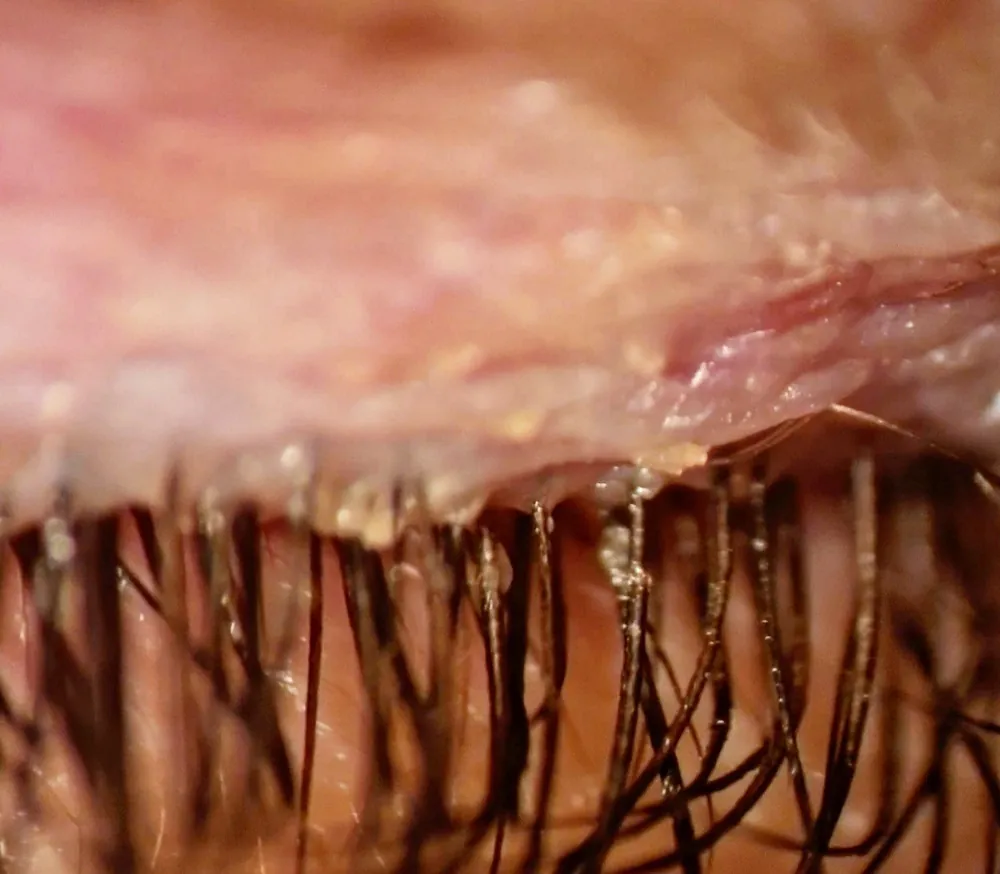
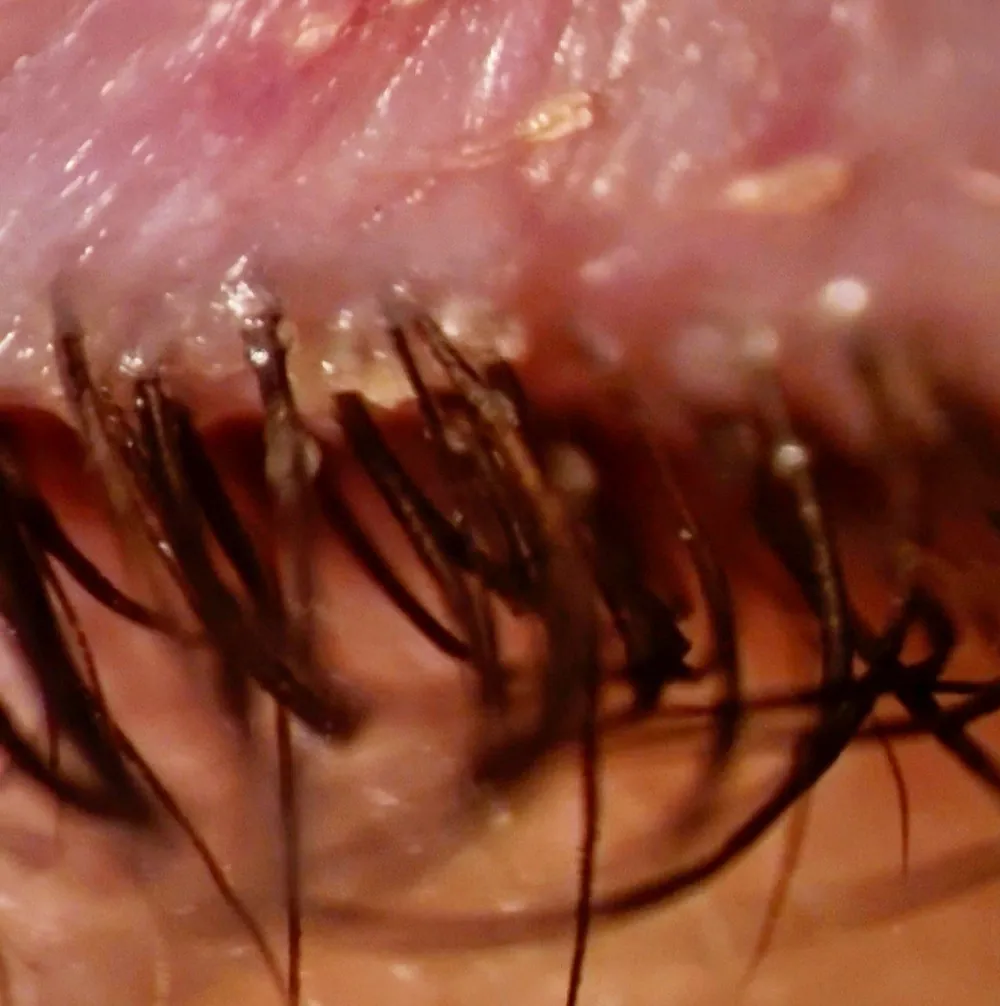
The photos and video below were taken through our slit lamp microscope with our SLEYECAM camera during real eye exams. They are cropped to the lashes, with no sound and nothing that identifies the patient.
What Demodex looks like under the microscope
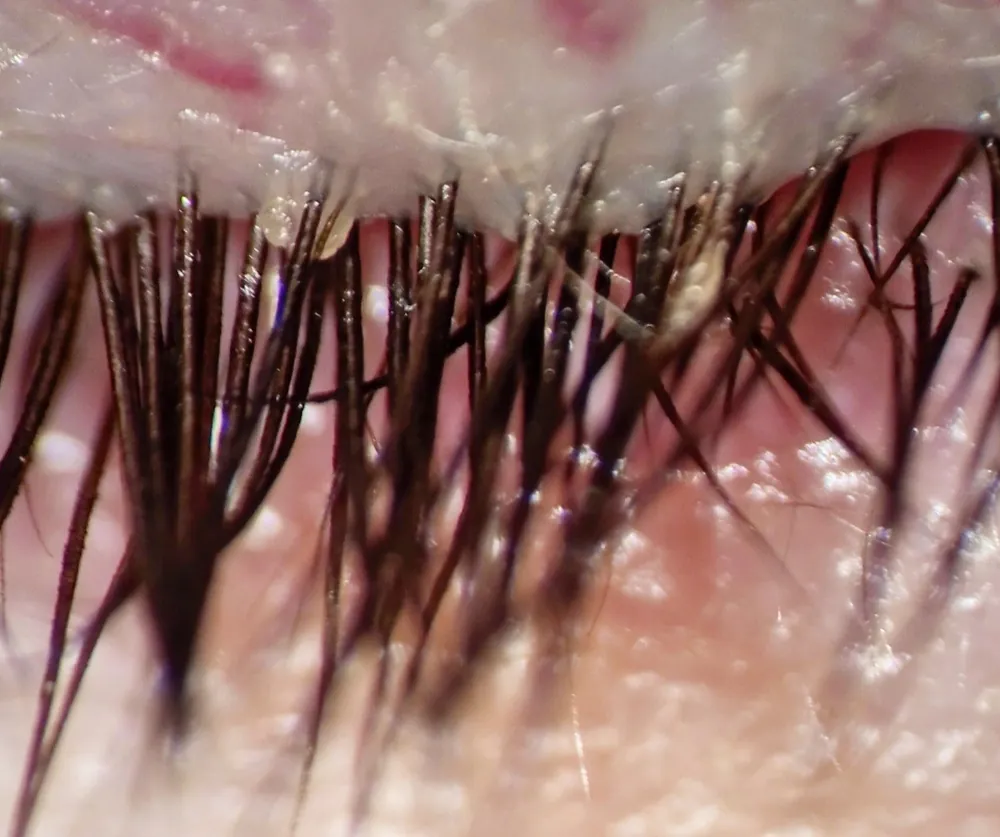
The mites themselves hide down in the follicle, but they leave behind collarettes: waxy, cuff-like crusts that wrap around the base of each lash, like a sleeve. Collarettes are the sign we look for at the slit lamp. They don’t come off with a quick rinse, and you usually can’t see them in a mirror.
Symptoms Demodex can cause
- Itchy eyelids, especially along the lash line
- Red, swollen or irritated lid edges
- Crusting or “dandruff” at the base of the lashes, often worse in the morning
- Burning, gritty or watery eyes, and dry eye symptoms
- Lashes that fall out or grow in the wrong direction
- Styes or chalazia that keep coming back
These symptoms can also come from allergies, dry eye or other kinds of blepharitis, so a close look under magnification is how we tell them apart.
How we check for Demodex
During an eye exam or a dry eye evaluation, we look at your eyelids, lashes and oil glands under high magnification at the slit lamp. If we see collarettes, we can photograph them with our SLEYECAM camera so you can see exactly what we see, and so we can compare at your follow-up visit.
How Demodex blepharitis is treated
- Xdemvy (lotilaner ophthalmic solution 0.25%), a prescription eye drop approved by the FDA for Demodex blepharitis. It’s used in each eye twice a day for six weeks, and our optometrists prescribe it.
- Eyelid hygiene: warm compresses and lid cleansers or wipes, as your doctor directs.
- In-office lid care, including TearCare for blocked oil glands.
- Treating related problems such as dry eye, allergies and rosacea.
Blepharitis is often a long-term condition, but it can be well controlled. Keeping up with lid hygiene, replacing eye makeup regularly and washing pillowcases often all help between visits.
Where to get your eyelids checked
Our doctors diagnose and treat blepharitis and Demodex at our Odessa and East Lake (Palm Harbor) offices. If itchy, crusty lids have been bothering you, book an exam and mention it when you schedule.
Common questions
Is Demodex contagious?
Blepharitis is not contagious, although Demodex mites are very common and can pass between people through close contact. Avoid sharing eye makeup, and wash pillowcases and towels often.
Can I see Demodex mites in the mirror?
Usually not. The mites are too small to see, and collarettes are hard to spot without magnification. Your eye doctor checks for them at the slit lamp.
How long does Xdemvy take?
Xdemvy is used in each eye twice a day for six weeks. Your doctor will recheck your lashes at a follow-up visit.
Do you treat Demodex at both private offices?
Yes. Our doctors diagnose and treat blepharitis and Demodex at our Odessa and East Lake (Palm Harbor) offices.