
Dry Eye Treatment
Relief for dry, irritated eyes.
Dry eye is common, uncomfortable and very treatable.
It isn't only about too few tears. We find what's causing your symptoms, then build a treatment plan around it.

Common symptoms
- Red, irritated or bloodshot eyes
- Burning, stinging or a gritty feeling
- Itchy eyes, or feeling like something is in the eye
- Sensitivity to light
- Watery eyes. Surprisingly, a common sign of dry eye
Dry eye self-test
How often have you noticed each of these in the past month? Answer all 8 for your score. This quick check doesn’t diagnose dry eye, but it can tell you whether a dry eye evaluation is worth booking.
What causes it?
Dry eye disease (also called dry eye syndrome or keratoconjunctivitis sicca) happens when your tear film can't keep the front of the eye smooth, wet and comfortable. Most dry eye is one of two types, and many people have both:
- Evaporative dry eye, the most common type. Blocked or unhealthy oil glands in the eyelids (meibomian gland dysfunction, or MGD) don't make enough oil, so tears evaporate too fast.
- Aqueous-deficient dry eye. The eyes don't make enough of the watery layer of tears, as in Sjögren’s and other autoimmune conditions.
Common causes and triggers include:
- Oil gland (meibomian gland) problems along the eyelids
- Eyelid inflammation (blepharitis), including Demodex mites
- Allergies and rosacea
- Medications such as antihistamines, antidepressants, blood pressure pills, acne medicine and hormone therapy
- Screens, contact lenses and Florida's air conditioning
- Changes with age and hormones, including menopause
- LASIK, cataract surgery and other eye surgery
- Autoimmune conditions, diabetes and thyroid disease
How we diagnose it: a complete dry eye evaluation
Dry eye has many causes, so we test instead of guessing. A dry eye evaluation can include:
- Meibography: infrared images of the oil glands inside your eyelids, so we can see blocked, shortened or missing glands. Available at our East Lake office in Palm Harbor.
- Tear meniscus height: a measurement of how much tear fluid sits along the lower lid.
- Tear breakup time (TBUT): how quickly your tear film breaks apart between blinks. A fast breakup time points to evaporative dry eye.
- Corneal topography with Placido rings: a map of the front surface of the eye that also shows how evenly the tear film covers it.
- Slit lamp exam and staining: a close look at the eyelids, lashes, gland openings and the surface of the eye, with dyes that light up dry or damaged spots.
- Demodex and lid margin check: looking for the collarettes at the base of the lashes that signal Demodex blepharitis.
- Photos and video with SLEYECAM: we record what we see through the slit lamp so we can show you, and compare your eyes visit to visit as treatment works.
We also review your medications, screen time, contact lenses, health history and any autoimmune symptoms, so the treatment plan fits the cause.
Treatment options
Florida optometrists prescribe the full range of dry eye medications, so your treatment starts at the visit. Depending on the cause and how severe it is, your plan can include:
- TearCare: in-office warming and expression of blocked eyelid oil glands
- Prescription dry eye drops, such as cyclosporine (Restasis, Cequa, Vevye), lifitegrast (Xiidra) and Miebo for evaporative dry eye, plus short courses of steroid drops for flare-ups
- Xdemvy for Demodex blepharitis
- Punctal plugs, tiny plugs placed in the tear drains to keep your natural tears on the eye longer
- Amniotic membrane therapy to help heal a damaged eye surface
- Oral medication, such as doxycycline or azithromycin, for meibomian gland dysfunction and ocular rosacea
- Eyelid hygiene, warm compresses, blinking exercises and the right artificial tears
- Contact lens and screen-habit changes, and checking whether a medication is part of the problem
Most patients do best with a step-by-step plan: we start with the treatments that fit your exam, then recheck and adjust. Using the same imaging each visit lets us show you what's improving.
Punctal plugs
Punctal plugs are one of the dry eye treatments we provide most often. A tiny plug is placed in the small drain opening in the corner of the eyelid, so your own tears stay on the surface of the eye longer instead of draining away. Placement takes just a few minutes in the exam chair. Dr. Than places most of the plugs at our practice.
Dry eye with contact lenses, screens and after surgery
Contact lens dry eye. If your contacts feel fine in the morning but scratchy by afternoon, the lens material, fit, solution or your tear film may be the cause. We can treat the dry eye and refit you in a more comfortable lens, including daily disposables and scleral lenses for severe dry eye.
Screen time. People blink less often and less completely while looking at a screen, which lets tears evaporate. Blinking breaks, the 20-20-20 rule and treating the oil glands all help. See headaches and eye strain.
After LASIK or cataract surgery. Dry eye is common for a few months after eye surgery. We treat it before surgery when we can, and after surgery as part of surgery co-management.
Dry eye care in Odessa, Palm Harbor and nearby
We see dry eye patients at our Odessa office on State Road 54 and our East Lake office in Palm Harbor, close to Trinity, Lutz, Land O’ Lakes, Keystone, Westchase, Tarpon Springs, Oldsmar and New Port Richey. Same-day appointments are available during office hours when your eyes are flaring.
Coming from Tampa?
Many of our dry eye patients drive in from Tampa, Westchase, Citrus Park, Carrollwood and New Tampa for a full dry eye evaluation and treatment plan. Our Odessa office on State Road 54 is about 15 to 20 minutes from Westchase and Citrus Park, about 20 to 25 minutes from Carrollwood, and about 30 to 40 minutes from New Tampa and central Tampa, depending on traffic. Meibography is done at our East Lake office in Palm Harbor.
Dry eye care usually takes a first evaluation and a follow-up or two, so we try to plan your tests and treatment to keep trips to a minimum. Our Westshore office in South Tampa is coming in 2027. See all locations and tips for traveling for care.
Seen through our slit lamp
These photos and videos were taken with the camera on our slit lamp microscope during real exams and are shared without any identifying details.
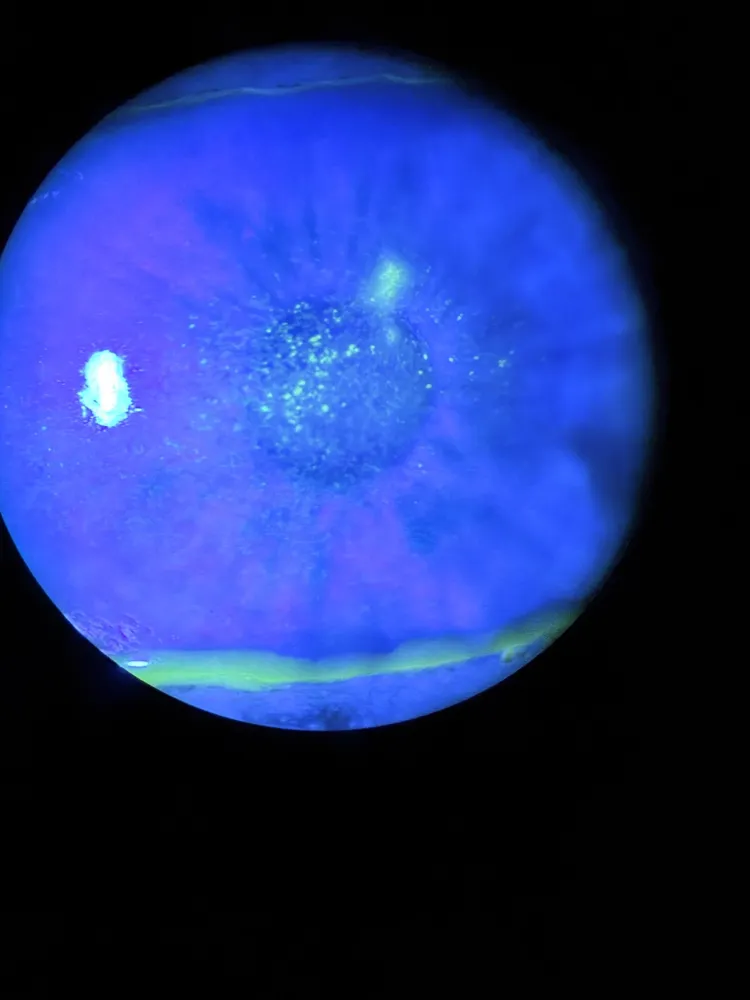
Narrated by Dr. Tumolo
Not sure if it’s dry eye? Try our private dry eye self-check, then book a visit to find the cause.
Common questions
What are punctal plugs?
Tiny plugs placed in the tear drains in the corners of the eyelids. They keep your natural tears on the eye longer, and placement takes just a few minutes in the exam chair.
Why are my eyes watery if they're dry?
Watery eyes are a common sign of dry eye. When the surface of the eye is irritated, it can make extra reflex tears that don't protect the eye well, so your eyes water even though they are dry.
What causes dry eye?
Dry eye often has more than one cause, including oil gland (meibomian gland) problems along the eyelids, eyelid inflammation (blepharitis), allergies, certain medications, screens, contact lenses, Florida's air conditioning, and changes with age and hormones.
How do you diagnose dry eye?
A dry eye evaluation can include meibography of the eyelid oil glands, tear meniscus height, tear breakup time, corneal topography, a slit lamp exam with staining, and a Demodex check, with photos and video so we can compare visits.
Do you treat dry eye from Sjögren’s or other autoimmune conditions?
Yes. See Sjögren’s and autoimmune dry eye care.
What treatments do you offer?
TearCare, prescription drops (Restasis, Cequa, Vevye, Xiidra, Miebo and steroid drops), Xdemvy for Demodex, punctal plugs, amniotic membranes, oral medication such as doxycycline, and eyelid hygiene and home care.
What is the best treatment for dry eye?
There isn’t one best treatment for everyone. The right treatment depends on the cause. Oil gland problems may need TearCare and lid care, inflammation may need prescription drops like Restasis, Cequa, Xiidra or Miebo, and low tear volume may need punctal plugs. We test first, then build a plan for your eyes.
Can an optometrist treat dry eye?
Yes. In Florida, optometrists diagnose and treat dry eye disease and prescribe dry eye medications, including prescription drops and oral medication, and perform in-office treatments such as punctal plugs, TearCare and amniotic membranes.
What is meibography?
Meibography takes infrared pictures of the oil glands inside your eyelids, so we can see whether they are blocked, shortened or missing. It helps explain evaporative dry eye and track treatment. It is available at our East Lake office.
What is tear breakup time?
Tear breakup time (TBUT) measures how many seconds your tear film stays smooth after a blink. A short breakup time usually means the oily layer of the tears is weak, which points to meibomian gland dysfunction.
Does insurance cover dry eye treatment?
Dry eye is a medical condition, so the visit and testing are often billed to medical insurance rather than a vision plan. Coverage for specific medications and in-office treatments varies by plan; we’ll explain your options before treatment.
Can dry eye be cured?
Dry eye is usually a long-term condition, but most people get lasting relief once the cause is treated. Many patients need less treatment over time, with occasional maintenance visits.
Where can I be seen for dry eye?
At our Odessa and East Lake (Palm Harbor) offices. Tell us it's for dry eye when you book so we can plan the right tests.
“I was having severe dry eyes and needed a quick appointment. I went to the Odessa location Dr. Than was able to see me right away and was so helpful and kind! Dr. Than takes time for her patients and it really shows.”Lauren C. · Odessa, Google review
Medically reviewed by Dr. Christopher Tumolo, O.D., L.D.O. · Last reviewed
Sources
- National Eye Institute: Dry Eye
- American Academy of Ophthalmology: What Is Dry Eye?
- American Optometric Association: Dry eye
- Craig JP, et al. TFOS DEWS II Report Executive Summary. Ocul Surf. 2017
- Nichols KK, et al. The international workshop on meibomian gland dysfunction: executive summary. IOVS. 2011
This page is general education, not a diagnosis. Same-day appointments are available during office hours.