
Keratoconus & Scleral Lenses
Clear, comfortable vision for irregular corneas.
Scleral, mini-scleral, hybrid, rigid gas permeable and custom soft lenses for keratoconus and other corneal conditions, fitted in Odessa and East Lake (Palm Harbor).
If glasses and regular contacts no longer give you clear vision, a lens designed for the shape of your cornea often can. Most patients are fitted in a single visit.
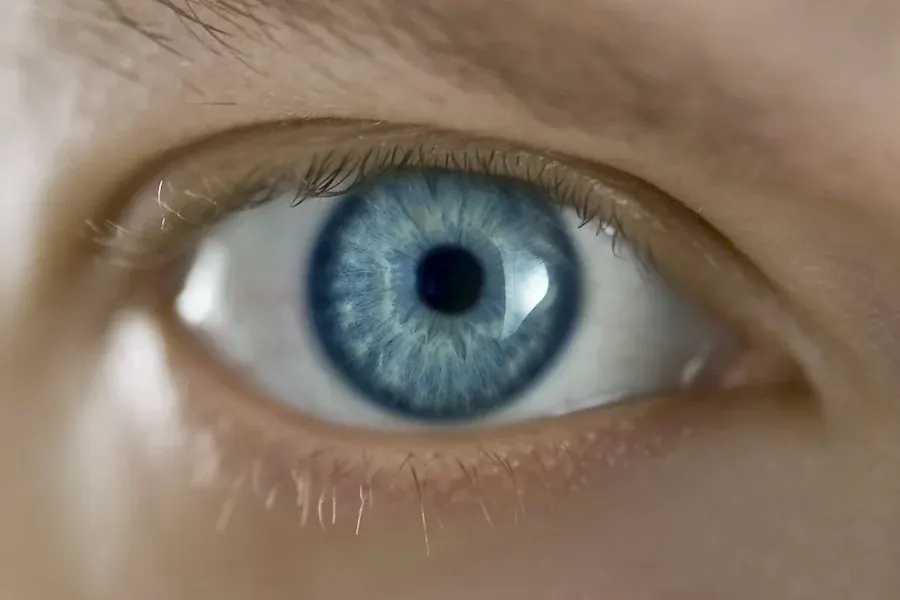
What is keratoconus?
Keratoconus is a condition in which the clear front surface of the eye, the cornea, gradually thins and bulges into a cone shape. Because the surface becomes irregular, light no longer focuses evenly, and vision becomes blurry and distorted. Many people notice glare, halos around lights, double or ghosted images, and prescriptions that change often.
Keratoconus usually begins in the teens or twenties and can progress for years. In the early stages, glasses or soft contacts may be enough. As the cornea changes, specialty contact lenses are often the best way to see clearly.
Specialty lenses we fit
How we map your cornea
A good fit starts with a precise picture of your cornea. We use the Nidek OPD-Scan III, which measures the shape of your cornea with Placido disc topography and elevation mapping. These maps show exactly where your cornea is steep, flat or irregular, and help us choose a lens design that fits.
During your fitting, our slit lamp camera records the fluorescein pattern under your trial lens, so we can see how the lens sits on your eye and show you what we're looking at.
What to expect at your fitting
- Corneal mapping. We measure your cornea and review your history, prescriptions and past lenses.
- Trial lenses. We place diagnostic lenses on your eyes and check your vision and comfort.
- Recorded fit. We photograph the fit with our slit lamp camera to fine-tune the design.
- Your lenses. We order lenses made for your eyes and teach you how to insert, remove and care for them.
Most fittings are completed in one visit.
Conditions we fit
- Keratoconus
- Pellucid marginal degeneration
- Corneal ectasia after LASIK, PRK or RK
- Irregular corneas after a corneal transplant
- Corneal dystrophies, including Fuchs dystrophy and posterior polymorphous corneal dystrophy (PPMD)
- Severe dry eye that may benefit from scleral lenses
- Other corneal conditions that make glasses or regular contacts hard to wear
Crosslinking and corneal surgery
Keratoconus can keep changing, so we track your corneal maps over time. If your keratoconus is progressing, we refer you for corneal crosslinking, a procedure that can slow or stop it. We also care for you before and after crosslinking or corneal surgery, and refit your lenses as your eyes heal and change.
Your doctors
Dr. Christopher Tumolo is an optometric physician and licensed optician with over 27 years of experience fitting complex prescriptions, including keratoconus, corneal dystrophies and hard-to-fit contact lenses. Dr. Vicky Than and Dr. Matthew Helsing also fit specialty lenses. All three see patients at both of our private offices, with most fittings in Odessa.
Insurance and cost
Specialty lenses for keratoconus are often covered as medically necessary contact lenses. We'll check your benefits before your fitting, so you know what to expect.
“I have severe keratoconus and worn scleral lenses for years. Never achieved better than 20/80. In my first fitting with Dr. Tumolo I’m at 20/30. It’s life changing to have good vision back!”Drew D. · Odessa, Google review
“I have suffered from [keratoconus] for decades. In 2017, I had a cornea replaced. I have always been told to stay with RGP lenses… Dr. [Tumolo] listened to my story and asked probing questions. He suggested that I should try soft lenses. We knew the fittings would be challenging but we stuck with it. Today, I am happily wearing soft lenses and the quality of my life has been transformed.”Bill R. · Odessa, Google review
Common questions
Can keratoconus be corrected with glasses?
Glasses can help in the early stages, but as the cornea becomes more irregular, glasses often can't give clear vision. Specialty contact lenses such as scleral, hybrid and rigid gas permeable lenses create a smooth optical surface over the cornea, which is why they're often the best way to see clearly with keratoconus.
How long does a scleral lens fitting take?
Most patients are fitted in a single visit. We map your cornea, try lenses on your eye and record how they fit, then order lenses made for your eyes.
Are scleral lenses comfortable?
Many patients find scleral lenses more comfortable than smaller rigid lenses, because they rest on the white of the eye instead of the sensitive cornea and hold a layer of fluid over the front of the eye.
Does insurance cover lenses for keratoconus?
Specialty lenses for keratoconus are often covered as medically necessary contact lenses. We'll check your benefits before your fitting.
Do you treat keratoconus that is getting worse?
We monitor your corneas over time. If your keratoconus is progressing, we refer you for corneal crosslinking, a procedure that can slow or stop it, and we care for you before and after the procedure.
Where can I be fitted?
Dr. Tumolo, Dr. Than and Dr. Helsing fit specialty lenses at both of our private offices in Odessa and East Lake (Palm Harbor). Most fittings take place in Odessa.