
What Is a Scleral Lens? A Guide for Keratoconus and Irregular Corneas
If you have keratoconus or another irregular cornea, you may have heard that glasses and regular soft contacts can only do so much. A scleral lens is one of the most effective ways to see clearly again, and many people find it more comfortable than they expected.
How a scleral lens works
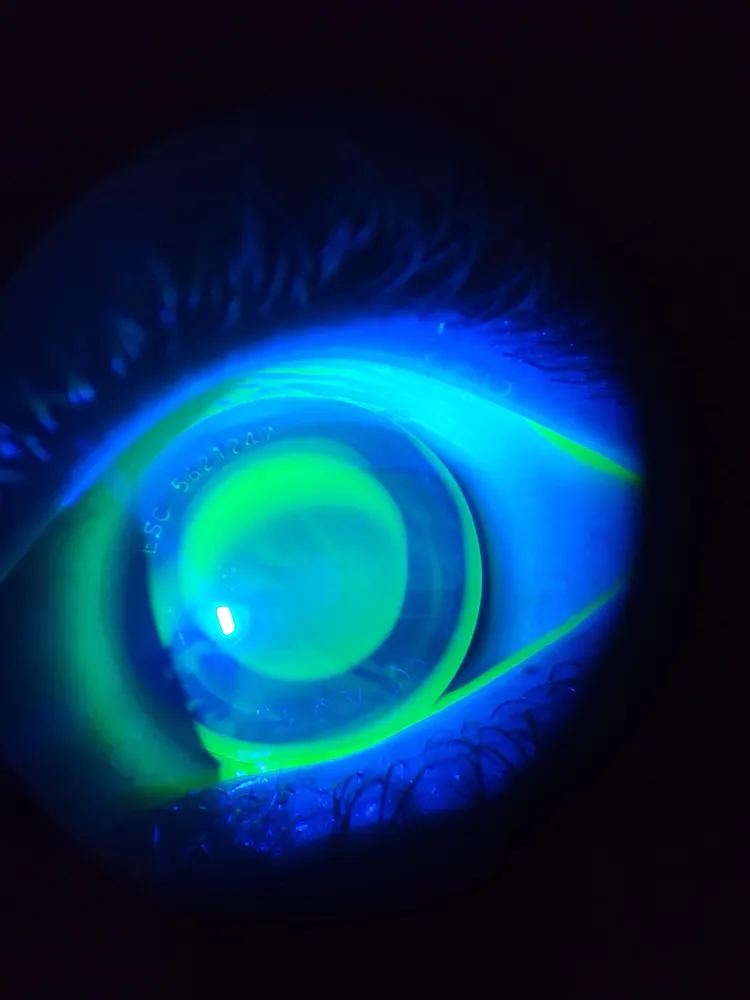
A scleral lens is a large, rigid gas permeable lens. Instead of sitting on the cornea, the clear front window of the eye, it rests on the white of the eye (the sclera) and vaults over the cornea without touching it.
Before the lens goes in, it’s filled with sterile saline. That cushion of fluid fills in the bumps and steep areas of an irregular cornea, so light passes through a smooth, even surface. The result is sharper vision than glasses can give an irregular cornea, and the saline keeps the front of the eye bathed all day.
Who scleral lenses help
- Keratoconus, where the cornea thins and bulges into a cone shape
- Pellucid marginal degeneration and other corneal thinning conditions
- Corneas changed by surgery or injury, including after LASIK, RK or a corneal transplant
- Severe dry eye and other ocular surface problems, where the saline reservoir protects and soothes the eye
- High prescriptions that are hard to correct with other lenses
Scleral lenses vs. other specialty lenses
Scleral lenses are one option among several. Depending on the shape of your cornea, your prescription and how your eyes feel, we may recommend a mini-scleral, hybrid, RGP or custom soft lens instead. We fit all of them, so the choice comes down to what works best for your eyes.
What a fitting involves
A good fit starts with a precise map of your cornea. We use the Nidek OPD-Scan III, which measures the shape and elevation of your cornea, along with slit lamp imaging so we can see how a lens sits on your eye.
Most fittings take just one visit. We choose a lens design from your measurements, place a diagnostic lens, check the fit and your vision, and order your custom lenses. You’ll come back to check the fit once they arrive, and we’ll show you how to put them in, take them out and care for them.
Is it covered by insurance?
When specialty lenses are needed to see clearly because of keratoconus or another corneal condition, they are often covered as medically necessary contact lenses. Coverage varies by plan, so we’ll check your benefits before your fitting.
Where to get fitted
Dr. Tumolo, Dr. Than and Dr. Helsing fit scleral and other specialty lenses at our Odessa and East Lake (Palm Harbor) offices. Bring your current glasses and lenses, and let us know you’re interested in a specialty lens consultation when you book.
Questions from former patients
Are scleral lenses comfortable?
Many people find them more comfortable than smaller rigid lenses. Because a scleral lens rests on the less sensitive white of the eye and vaults over the cornea, the cornea itself isn’t touched.
How long does a scleral lens fitting take?
Most fittings take one visit, plus a follow-up once your custom lenses arrive.
Can scleral lenses help dry eye?
Yes. The saline under the lens keeps the front of the eye bathed all day, which can help people with severe dry eye and other ocular surface problems.
Does insurance cover scleral lenses?
They are often covered as medically necessary contact lenses when they are needed because of keratoconus or another corneal condition. Coverage varies by plan, so we check your benefits first.